
Why Navigator International Combines Construction With Technical Support

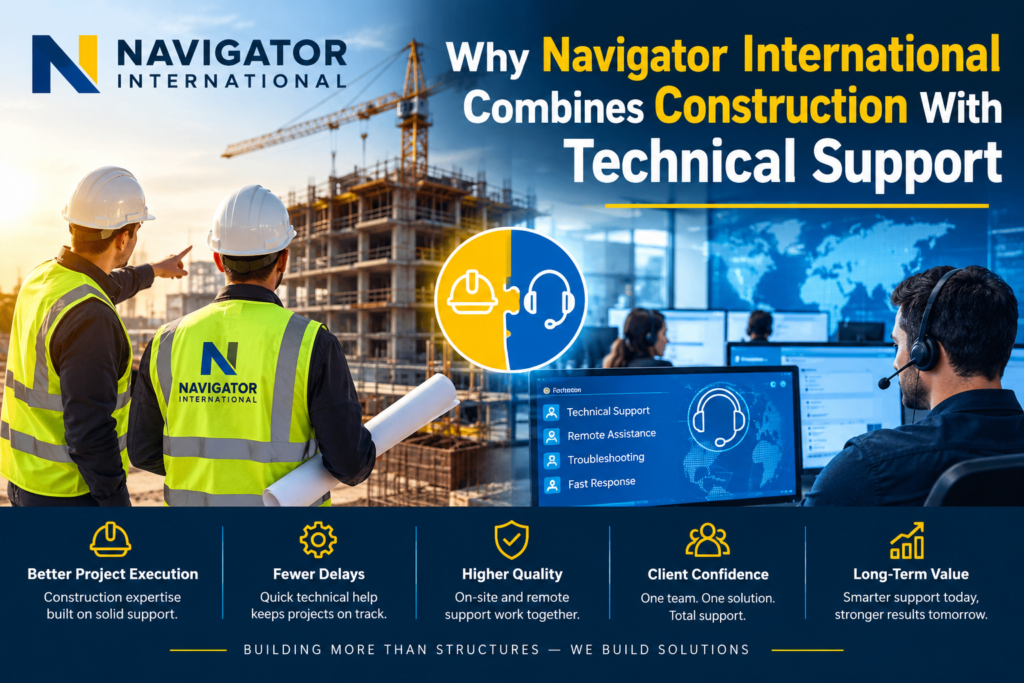
A completed facility still has to work after crews leave. That reality makes technical support important on government and overseas projects, where equipment, logistics, documentation, and maintenance may be difficult to replace quickly. Combining construction with technical services gives project teams a clearer path from design and installation to dependable operation.
The Strategic Intersection of Global Infrastructure and Technical Expertise
Large infrastructure projects bring together structural systems, utilities, equipment, communications, security, and operational requirements that cannot operate in isolation. Engineers may need to answer field questions while procurement teams confirm substitutions and construction managers adjust sequencing around actual site conditions. Integrated technical support keeps those decisions tied to the intended use of the facility.
Navigator International Global Construction reflects this project model by connecting construction activity with design, fabrication, supply, shipping, and related support functions. Rather than treating each discipline as a separate handoff, coordinated teams can trace how one technical decision affects purchasing, installation, testing, and future service requirements.
Minimizing Operational Downtime Through Integrated Technical Support
Unexpected equipment problems can slow a project or interrupt operations after turnover. Technical personnel who understand installed systems can help identify whether a failure comes from the equipment itself, its controls, utility conditions, installation details, or maintenance practices. Faster diagnosis gives managers better information before they order parts or schedule corrective work.
Field support also becomes valuable during commissioning, when systems begin operating together for the first time. Specialists can review test results, correct settings, verify documentation, and explain unresolved faults to the appropriate trade. Nav Int can support this kind of continuity where construction and technical needs overlap across active government construction environments.
How End-to-End Solutions Streamline Complex Multi-National Projects
Cross-border work introduces more handoffs than a typical domestic job. Designs may originate in one country, equipment in another, fabrication somewhere else, and installation at a remote destination with its own regulations and labor practices. Each transfer creates opportunities for missing information, incompatible materials, or unclear responsibility.
End-to-end coordination gives those handoffs a common structure. International construction teams can connect drawings with purchase orders, shipping records, inspection requirements, and installation schedules so field personnel know what is arriving and how it fits the approved design. Consistent records also make later testing and closeout easier to manage.
Meeting Strict International Standards with On-Site Engineering Support
Government and military facilities may operate under federal criteria alongside host-country codes, permits, environmental rules, and local inspection procedures. Questions often appear after construction begins, especially where existing utilities, soils, access conditions, or regional materials differ from early assumptions. On-site engineering support helps project teams evaluate those conditions before informal changes become permanent work.
Services under Navigator International Government construction can place technical planning within the larger delivery process rather than separating engineering from field execution. Clear review routes allow proposed changes to be checked for structural, mechanical, electrical, security, and operational effects before approval, helping preserve compliance while keeping construction moving.
Mitigating Compliance and Remote Supply Chain Risks Simultaneously
Even a technically acceptable component may create problems if it cannot be imported, documented, stored, or serviced at the project location. Procurement teams therefore need to review certifications, shipping requirements, availability, and replacement support alongside basic performance. Such a wider check can prevent a seemingly simple substitution from creating customs delays or future maintenance difficulties.
Global construction programs also benefit from supply accountability because critical materials may pass through several carriers, warehouses, and inspection points before installation. Accurate packing lists, shipment records, serial numbers, and receiving reports help managers confirm what arrived and whether it matches approved requirements. Combined technical and logistics teams can resolve discrepancies before crews depend on the item.
Accelerating Global Project Timelines via Real-Time Troubleshooting
Schedules often lose time because field personnel wait for answers rather than because the physical repair itself is difficult. Something as small as a misplaced penetration or conflicting dimension can stop several trades until someone with the right authority and technical knowledge reviews the issue. Responsive troubleshooting keeps small questions from spreading into schedule conflicts.
Digital drawings, photographs, test data, and direct communication can give remote specialists enough information to support field decisions without waiting for travel. The Navigator International Construction Company service structure can connect technical, construction, and logistics personnel where timely coordination is needed, particularly on dispersed projects with limited local specialist resources.
The Value of Turnkey Support for Large-Scale Infrastructure Lifespans
Turnkey support has the greatest value when it extends beyond physical completion. Facility operators need as-built drawings, equipment records, warranties, spare parts, maintenance guidance, training, and test results that match what crews actually installed. Missing information can turn routine service into an expensive search for specifications or replacement components.
Long-term support also gives project teams a reason to consider maintainability during design and procurement. Equipment access, local parts availability, technical documentation, and operator skills can influence whether a system remains practical years after acceptance. For agencies and project partners that need help connecting international construction with technical and lifecycle support, Navigator International offers a service model that can carry those needs from project delivery into continued operation.





Responses